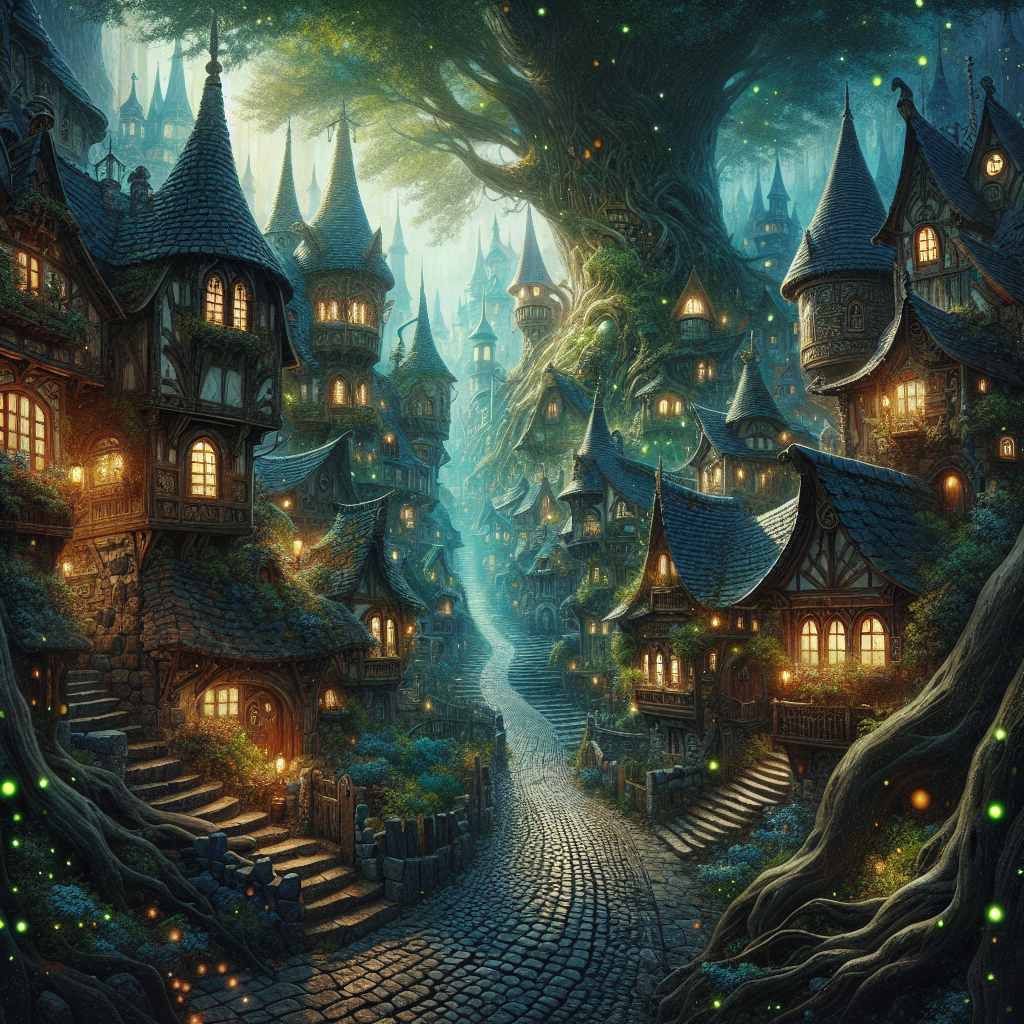
Town names from the pool, and what each one signals
These are pool-verified — taken from this generator’s own curated pool rather than written for the table. The notes describe what each name tells a reader about the place, which is the part that decides whether it fits your map.
| Name | What it signals |
|---|
| Thornridge | Landform plus obstacle. A defensible upland settlement; the thorn suggests poor farming and hard people. |
| Silverstream | Resource plus water. A town that exists because something valuable was found in the riverbed. |
| Ravenscar | Animal plus wound-word. Ominous without being silly — somewhere a battle happened. |
| Whispering Hollow | Two soft words and a low landform. Reads small, isolated, and slightly wrong. |
| Ironvale | Material plus valley. Mining and smithing; the flattest, most useful kind of town name. |
| Frostfire Glade | Two opposed elements. Magical or elemental in origin — do not use it for an ordinary farming village. |
| Emberwood Grove | Fire plus forest. Implies a burn that people remember and rebuilt around. |
| Duskshire | Time-of-day plus administrative ending. Sounds settled and taxed — a place with records. |
| Moonstone Cove | Gem plus coastal landform. A harbour town with a trade worth naming itself after. |
| Sableforge | Colour plus industry. Compact and hard; reads as a single-industry town. |
| Velkarn Hold | Invented root plus fortress-word. Foreign-sounding, defensive — good for a frontier. |
| Fellshade | Two grim syllables and no landform at all. Ambiguous by design; useful when you want unease. |
How to build a town name that fits your map
Almost every convincing settlement name in fantasy — and in reality — is a feature plus a settlement-word. The feature is why people stopped there; the settlement-word is what they built. Get those two halves right and the name will sound real even if you invented it in four seconds.
Start with why the town exists. Towns appear where there is a river crossing, a defensible hill, a mine, a harbour, a crossroads or a shrine — and the name usually preserves that reason long after it stops mattering. A town called Ironvale had a mine. If the mine is exhausted, the name is now a piece of history, and that is a free hook.
Then choose the settlement-word deliberately, because English gives you a scale of size and age for free: -thorpe, -stead, -holt read as tiny and old; -ton, -ham, -wick, -by read as ordinary villages; -ford, -bridge, -crossing announce a route; -burgh, -keep, -hold, -bastion mean somebody fortified it; -shire, -mark imply administration rather than a single settlement.
Making a region sound like a region
The commonest mistake is naming towns one at a time, so that a single day’s travel takes the party from Whispering Hollow to Velkarn Hold to Duskshire — three naming traditions with no history that could produce them. Real place names cluster, because the people who made them shared a language.
The fix takes two minutes. Pick one sound family for your region and let most names use it — a stretch of country where everything ends in -vale and -moor, say. Then break the pattern deliberately, once or twice, for places settled by somebody else, and let that difference mean something. A single foreign-sounding name in a valley of English-sounding ones is a story about conquest or migration; five of them scattered at random is just noise.
Two tests before you use it
Say it in play. “We’re two days out from Ravenscar” should come out cleanly. If the name snags, rename it now rather than in session nine.
Check the tone against the town’s actual function. A cheerful market village called Fellshade is a joke unless you intend it. Grim names are memorable and easy to overuse — most towns are ordinary, and ordinary names make the sinister ones land.
How these names are made
Every name this generator offers comes from a curated pool that is written and reviewed by hand, not scraped from other name sites. Two rules govern what goes in it. First, recognisable trademarked and copyrighted character names are kept out deliberately, and any that slip in are removed and permanently blocked — so you are never handed someone else’s intellectual property to publish under your own. Second, names are checked against the register of the thing they are naming, so a pool labelled for one ancestry does not quietly fill up with names from another.
The generator is free, needs no account, and collects no email address to use. Everything it produces is yours to use in commercial or non-commercial work with no attribution required.
Frequently asked questions
What makes a good fantasy town name?
A good fantasy town name is a feature plus a settlement-word — the reason people stopped there, followed by what they built. Ironvale, Silverstream and Thornridge all follow this. Choose the ending deliberately: -thorpe and -stead read tiny and old, -ford and -crossing announce a trade route, -hold and -keep mean the place was fortified.
How do I make my town names sound like they belong to the same region?
Give most settlements in a region one shared sound family, because real place names cluster along linguistic lines. Then break the pattern once or twice on purpose for places settled by outsiders, and let that difference carry a piece of history.
Are these town names free to use in my campaign or book?
Yes. Every name this generator produces is free to use in commercial and non-commercial work with no attribution required, and recognisable trademarked place names are deliberately kept out of the pool.