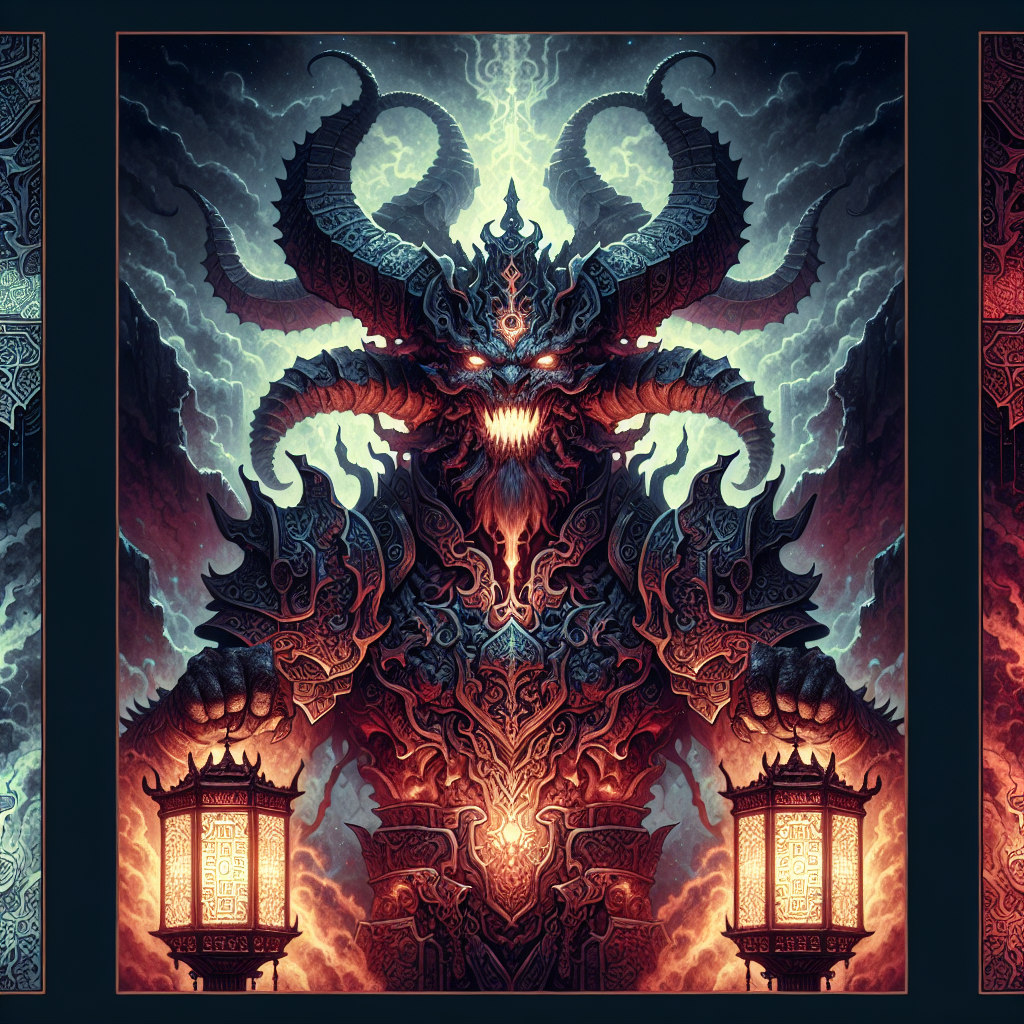
Welcome to a realm where creativity knows no bounds. Dive into our collection of tools designed to help you craft unforgettable characters, captivating worlds, and intricate stories. Whether you’re preparing for a game night or writing your next fantasy novel, we have the resources you need at your fingertips.
Generate names for demon:
Describe a style, vibe, sound, or theme and we'll tailor the names to it.
A selection of demon names from this generator - click any name to copy it:
Explore the fascinating world of demons with us. This section paints a vivid picture of their myths and histories, providing you with insights and tales that ignite the imagination. Pair this knowledge with our interactive tools to enhance your storytelling.
Craft enchanting elf names that resonate with magic and mystery—perfect for your fantasy realms.
Generate fierce dragon names that capture their essence—ideal for adventurous tales and epic quests.
Forge powerful orc names that embody strength and bravery—perfect for your gaming campaigns.
Generate sturdy dwarf names that reflect honor and craftsmanship—great for your fantasy worlds.
Unleash eerie undead names that haunt your stories and campaigns—essential for dark narratives.
Create names for a variety of magical creatures to enrich your tales—perfect for every fantasy setting.
The useful thing to understand about demon naming is that a demon’s name is rarely just an identifier. It is a claim — about what the thing does, what it has done, or what rank it holds. Read the grammar of the name and you learn where the creature sits in the hierarchy, which is exactly the information a GM wants to hand a player without a lore dump.
Our pool contains three distinct grammatical patterns, and they are not interchangeable.
Drawn live from this generator’s curated pool — pool-verified. The second column describes structure and register, not meaning; these are constructed names and no translation is implied.
| Name | Pattern and what it signals |
|---|---|
| Zarathul Nightflame | Name + compound epithet. Named, established, has a reputation attached |
| Thragoth the Vile | Name + “the” + adjective. The most formal construction — a rank, or a thing others speak about carefully |
| Mordrith Soulrender | Name + agent-noun epithet. The epithet describes an action, so it names a specialist |
| Abyzoth the Tormentor | “The” + agent noun — the highest-status shape in the set, a title in all but name |
| Kharzoth Shadowreaver | Heavy Kh- onset with an action epithet; reads as a warrior rather than a schemer |
| Malzakar Fiendscribe | The one clerical epithet in the pool — useful for a demon that keeps records rather than trophies |
| Vexallus Hellbinder | Latinate -us ending against a plain-tongue epithet; reads older and more codified |
| Karnath the Betrayer | The epithet is historical, not functional — this one is named for something it did once |
| Erebos Dreadshade | Shortest given name in the set; the restraint makes it read as genuinely old |
| Kaldrak Sinspawn | Epithet describes origin rather than deed — low status, recently made |
The given name carries no meaning — it carries weight. Zarathul, Kharzoth, Malzakar, Tzarthar, Zyltharax. Three or four syllables, hard consonants, and a strong preference for Z, K, Th and X. These are sound-first constructions. Trying to assign them meanings is where a lot of homebrew goes wrong.
The epithet carries the information, and it comes in three flavours. Deed epithets describe an action and imply a specialism (Soulrender, Shadowreaver, Souldrinker, Hellbinder). Quality epithets describe a nature (Nightflame, Dreadshade, Darkspite, Ashenfang). Origin epithets describe how the thing came to exist (Sinspawn, Fiendscribe) and generally mark lower rank — being named for your birth means you have not done anything noteworthy yet.
“The” is a promotion. Compare Kaldrak Sinspawn with Abyzoth the Tormentor. The definite article turns an epithet into a title and implies there is only one. Reserve it for creatures your players should be worried about, and it does real work at the table for free.
Demons in most settings are not meaningfully gendered, which makes the naming freer than it is for mortal ancestries — but the sounds still read a particular way to an English-speaking table, so it is worth being deliberate.
Pool names that read feminine do so through softer medial consonants and vowel endings: Xylaris Bloodthorn, Malthyrix Ashenfang, Tyrnax Doomgrip. Names that read masculine close hard: Kharzoth, Gorvath, Varnok, Thragoth. For a genuinely neutral effect, use a name that ends in -os, -is or -ax and pair it with a quality epithet rather than a deed: Erebos Dreadshade and Shadrax the Cursed are the clearest examples in the pool.
If gender is irrelevant in your cosmology, drop the given name entirely and use the epithet alone. “The Tormentor” is a complete name and a stronger one.
Giving every demon a title. If all of them are “the Something”, none of them are. Titles work by contrast — keep most of your demons on plain name-plus-epithet so the titled ones land.
Epithets that describe the fight instead of the creature. “Bloodletter” and “Skullcrusher” tell you what a combat looks like; “the Betrayer” and “Fiendscribe” tell you what a scene looks like. The second kind gives you plot.
Using a real demonological name for a random encounter. Names lifted from actual grimoires and from published settings carry baggage — and in the published-setting case, they are somebody else’s property. Our pool excludes those, and anything that slips through gets removed and blocked from regenerating.
For the mortal side of the same bloodline, use the tiefling name generator. For what the demon casts, see the spell name generator, and for everything else that stalks the dark, browse the creatures index.
Every name on this page comes from a hand-curated pool held on our own server, not generated fresh on each click from a text prompt. Pools are drafted, then reviewed by a person: entries are culled, corrected for sound, and screened so that trademarked and protected names from published settings are excluded — and anything that does slip in is removed and added to a blocklist so it cannot come back. The generator is free, requires no account and no email address, and we do not put names behind a signup.
Where this page describes what a name means, it does so only for names drawn from real historical traditions. For constructed fantasy names we describe sound and register instead, because inventing etymologies for made-up words would be misleading.
The given name identifies the creature and generally carries no meaning — it is built for sound. The epithet carries the information: what the demon does, what it is like, or how it came to exist. Most full demon names in this pool are one of each.
Use the definite article for creatures with singular status — it implies there is only one of them. If every demon in your campaign has a title, the construction stops signalling anything, so keep it rare.
Not inherently, since most settings do not treat demons as gendered. Sounds still read a particular way to English-speaking players, so vowel endings tend to read feminine and hard consonant endings masculine. Using the epithet alone sidesteps the question entirely.
Yes — free to use in home games, published adventures and fiction, with no account, no signup and no attribution required.
Join our community for the latest insights, tools, and features that empower your creativity. Our subscription keeps you informed and inspired, tailored just for storytellers and gamers.
By clicking Join Us, you accept our terms and conditions.
Demons are the one category of fantasy name where the name is the mechanic. Almost every tradition that writes about them — Mesopotamian incantation bowls, the medieval grimoires, most modern tabletop rules — agrees on the same superstition: a demon’s real name is a handle, and whoever holds it holds the demon. That single idea does more work at the table than any amount of apostrophe-studded spelling. It means a demon has at minimum two names, and the gap between them is the whole character.
These twenty come straight from the hand-curated pool behind our demon generator. They are built on a consistent grammar worth stealing: a hard invented given name carrying at least one of Z, K, X or TH, welded to either an English compound of harm (Soulrender, Doomwhisper, Shadowreaver) or an epithet in the older the Vile, the Betrayer form. The compound version sounds like a name a demon chose for itself. The epithet version sounds like one it was given by someone who survived it.
A true name should be slightly unpleasant to pronounce. That is its job. These are deliberately overloaded with consonant clusters and glottal breaks, and none of them scan cleanly in English — if a player can rattle one off on the first attempt, it is not doing the work. Use them written down, on a scroll or a binding contract, and let the moment a character tries to say one out loud be a real risk. Pair each with a use name from the section above: Xar’gathuun, who introduces itself as Varnok Flameheart.
Titles are the most underused demon name and the most immediately atmospheric, because a good one contains a threat and a job description at once. The pattern is bureaucratic rather than monstrous: debts, hours, witnesses, signatures, chairs. Hell in most fiction that lands is an institution, not a furnace, and a demon that introduces itself as the Patient Creditor tells your players more about the danger they are in than any amount of description. These also work as the formal name inside a summoning circle, with the true name held back.
Lord names need grandeur and a possessive: the name, a comma, and the thing it owns or rules. That structure signals rank instantly, which matters when you want a table to understand without exposition that this one is not like the last one. Keep the given portion long and orotund — four syllables reads as ancient — and make the domain concrete and slightly strange. Lord of Sealed Doors is more frightening than Lord of Darkness because it sounds like a specific, enforceable jurisdiction.
The mistake with imps is giving them scaled-down lord names. A lesser demon should sound like the noise it makes, in one syllable or two, blunt and slightly disgusting. These are the names for the thing chained in a wizard’s cellar that complains constantly and will absolutely betray you for a warm coat. Short names also do something useful mechanically: they are easy to say quickly, so an imp can be interrupted, ordered around and killed off without slowing the scene, which is exactly the register you want.
These lean on a different sound entirely — liquid consonants, open vowels, soft landings — because the character trades on being pleasant to hear. The trick is to bury the menace in the surname or the epithet rather than the given name: Mireva the Soft Answer and Kalienne the Second Promise are both perfectly lovely until you think about them for a second. That delayed realisation is the effect you are after. If the name sounds sinister immediately, the character has already failed at its job.
These are real, drawn from actual religious and folkloric sources rather than invented for a game. They carry weight precisely because people once took them seriously, and they are useful when you want a name your players might half-recognise. A short note on each so you can borrow accurately rather than by vibe.
Work backwards from the bargain. Decide what the demon wants and what it charges, and the name follows: a demon that collects years off a lifespan is a tally-keeper, and its name should sound like an accountant with teeth. Then apply the three-layer test — write the true name first and make it genuinely awkward, derive a smoother use name from two or three of its syllables so the connection is audible once someone notices, and give it a title describing its jurisdiction. Finally, say all three out loud. The true name should fight back, the use name should be easy, and the title should be the one that makes the table go quiet.
If you want a name generated to fit a world you have already built rather than picked off a list, the demon name generator takes a description of your setting and matches its output to it. For the mortals who deal with them, tiefling names covers the infernal-descended, villain names handles antagonists who are merely human, and the broader method behind all of this is in naming everything in your fantasy world. The full directory of name generators covers every other race and place you will need.
These 128 curated names are hand-picked, not generated. The names in the generator above come from this site’s finite, hand-checked demon pool — every one verified free of protected intellectual property.
Every generator below draws from its own finite, hand-checked pool: Dragonborn Name Generator · Druid Name Generator · Dwarf Name Generator · Fae Name Generator · Fairy Name Generator · Fantasy Name Generator · All Race Generators