Unleash your imagination with unique character names crafted just for you.
Generate names for tiefling:
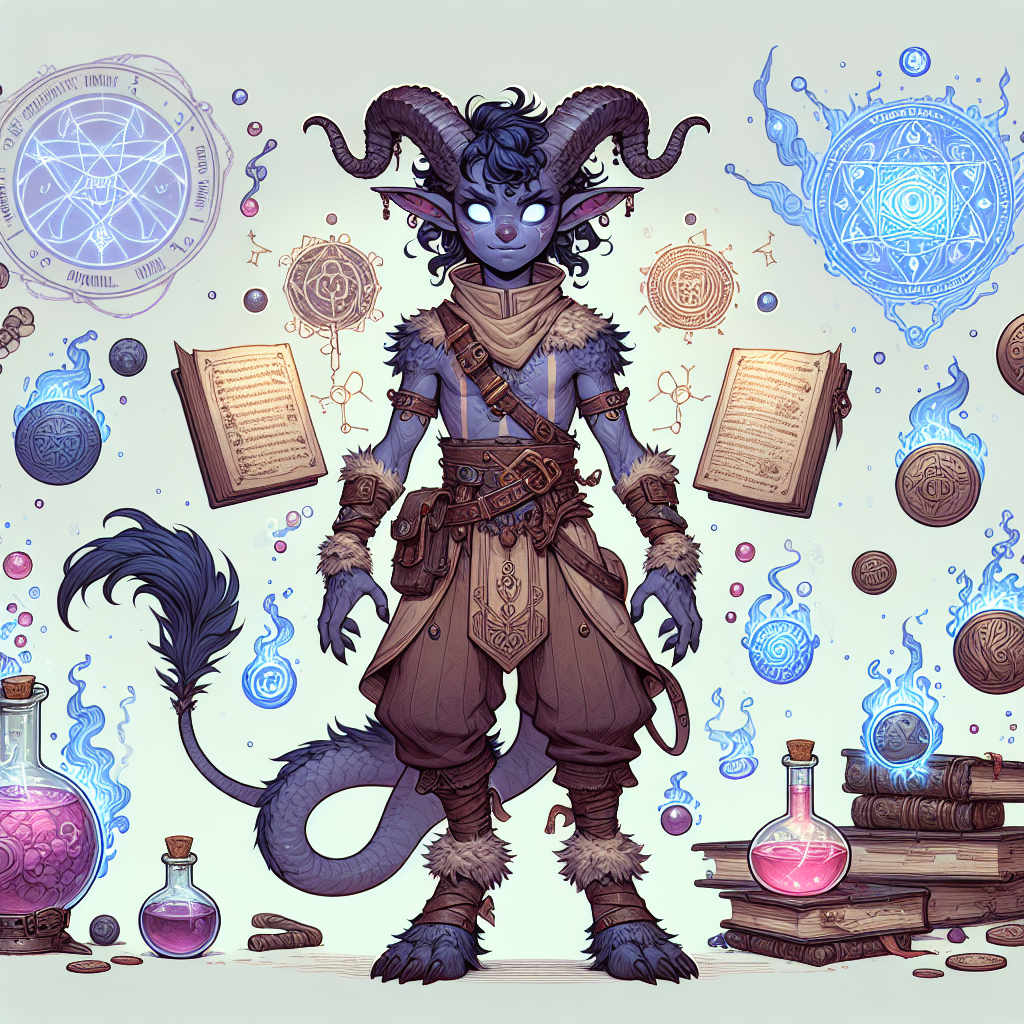
Describe a style, vibe, sound, or theme and we'll tailor the names to it.
A selection of tiefling names from this generator - click any name to copy it:
Tiefling names carry a rich history, steeped in the cultures of their origins. These names often reflect their infernal heritage, showcasing a mix of beautiful and powerful meanings. Understanding these names adds depth to your character, revealing insights into their background and personality. Whether you’re crafting a story or playing a game, a Tiefling’s name can enhance your experience, bringing your character to life.
Discover a selection of unique names designed to inspire your next character or world. Each example highlights the creativity and depth you can achieve using our tools. Unleash your imagination as you delve into the stories these names can tell.
Explore how our name generator can elevate your storytelling or gameplay experience. Each name is not just a label, but a gateway to rich backgrounds and adventures waiting to unfold. Start your journey by envisioning what these characters might become!
Tiefling naming splits along the single fact that defines the ancestry: someone else decided what you are before you got a say. Names fall into two traditions, and picking between them is the first characterisation decision you make. Infernal-derived names are inherited — heavy, consonantal, carried down a bloodline whether the bearer wanted them or not. Virtue names are chosen — plain words in the common tongue, taken by tieflings raised outside infernal culture or deliberately rejecting it.
Our pool leans hard into the first tradition, so this page explains that one properly rather than pretending to cover both equally.
These are drawn live from the generator’s curated pool on this page — pool-verified, not examples invented for an article. The right-hand column describes how each name reads in sound and register. It is not a translation: these are constructed names, and inventing etymologies for them would be dishonest.
| Name | How it reads |
|---|---|
| Zarathar Vex’thul | Front-loaded Z, three heavy syllables, apostrophe surname — the most overtly infernal shape in the set |
| Lilithra Nyx’kala | Liquid consonants over a hard surname; reads feminine and old rather than aggressive |
| Thalindra Erednash | Elvish-adjacent given name against a blunt surname — useful for a mixed-heritage character |
| Kordath Xel’gorath | Two stops and a growl; the surname is longer than the name, which reads as lineage pride |
| Xylaris Cinderbane | Infernal given name, plain-tongue surname — a bloodline name paired with a translated epithet |
| Vespera Mor’kath | Soft, almost Latinate first name; the surname does all the menace |
| Tazira Brimstone | Short and modern-sounding, with the least subtle surname in the pool |
| Elexis Grimfrost | Cold register rather than hot — useful if you want a tiefling far from the fire cliché |
| Feyloth Nox’kael | Fey- opening pulls slightly toward the feywild; the surname pulls back |
| Vexara Gloomspire | Repeated -a- vowels make it chant-like; the surname is architectural, not elemental |
The pool is doing three consistent structural things, and once you see them you can build your own that sit alongside these without clashing.
Hard onsets. Look at the first letters: Z, X, K, M, Th, V. Voiced fricatives and stops. Almost nothing opens on a soft vowel. That single choice does most of the work of making a name sound infernal rather than elvish.
The apostrophe surname. Vex’thul, Nyx’kala, Xel’gorath, Mor’kath, Nox’kael. The apostrophe implies a break the common tongue cannot pronounce — a second language surviving inside the name. Use it sparingly. One apostrophe per name reads as a foreign language; two reads as a keyboard accident.
The compound epithet. Cinderbane, Ashenveil, Grimfrost, Thornshadow, Embersoul, Gloomspire. These are common-tongue words welded together, and they are best understood as translations — what other people call the family, rendered into a language they can say. That is why they mix freely with infernal given names.
The practical rule: pick one register for the given name and one for the surname. A name that is infernal on both halves reads as a monster; a name that is plain on both halves reads as a human. The interesting characters live in the mismatch.
Tiefling naming is not strongly gendered — the infernal register does not carry the -a/-us conventions that Latin-derived human names do. In practice, names read feminine when they use liquid consonants (l, r, n) and open vowel endings: Lilithra, Vespera, Zyphira, Tazira, Vexara, Thalindra, Sableen (all pool-verified). They read masculine when they end on a consonant cluster: Zarathar, Kordath, Malakar, Azrathis, Thyrrik.
For a genuinely neutral name, take one that ends in -is, -ix or -es: Xylaris, Elexis, Cyraxis, Varael. None of these carry a gender signal in either direction, which is why they suit changeable or non-binary characters without needing to be explained at the table.
Naming the character after the trauma. Grief, Sorrow, Wretched, Cursed — virtue names are supposed to be aspirational or ironic, and a tiefling literally named Misery collapses the character into one note before play starts. If you want a virtue name, choose one with tension in it: Constance, Reverence, Fortune.
Borrowing a devil’s name directly. Named archdevils are somebody else’s intellectual property and they are also bad worldbuilding — it reads as if a mortal were called Napoleon. Our pool excludes them deliberately, and any that surface get removed and blocked from regenerating.
Overspending on apostrophes and X. Three apostrophes and two Xs in one name stops reading as infernal and starts reading as a password. The pool averages roughly one of each per full name, which is about the ceiling.
Building the rest of the party or the scene? Try the demon name generator for the infernal side of the bloodline, the NPC name generator for everyone the tiefling meets, or browse every ancestry on the races index. For the wider method, see how to name a fantasy world.
Every name on this page comes from a hand-curated pool held on our own server, not generated fresh on each click from a text prompt. Pools are drafted, then reviewed by a person: entries are culled, corrected for sound, and screened so that trademarked and protected names from published settings are excluded — and anything that does slip in is removed and added to a blocklist so it cannot come back. The generator is free, requires no account and no email address, and we do not put names behind a signup.
Where this page describes what a name means, it does so only for names drawn from real historical traditions. For constructed fantasy names we describe sound and register instead, because inventing etymologies for made-up words would be misleading.
Both, and the difference is characterisation. Infernal-derived names are inherited down a bloodline; virtue names are chosen, usually by tieflings raised outside infernal culture or rejecting it. A character who has switched from one to the other has a story built into their name.
The apostrophe stands in for a sound the common tongue cannot produce, implying the surname survives from another language. It is a convention rather than a rule, and it works best used once per name — more than that reads as clutter rather than as a foreign tongue.
Only weakly. Names read feminine when they use liquid consonants and open vowel endings, and masculine when they close on a consonant cluster, but there is no fixed system. Names ending in -is, -ix or -es read as genuinely neutral.
Yes. Everything the generator produces is free to use in home games, published adventures and fiction, with no account, no signup and no attribution required.
Subscribe to our newsletter and never miss exciting updates, tips, and offers from our tools! It’s quick and simple. Just enter your details below, and we’ll keep you informed.
Tieflings carry their heritage in their names, and that makes naming one a character decision before it is a style decision. A tiefling might bear a harsh Infernal name handed down a fiendish bloodline, a plain human name from the city that raised them, or a virtue name — a single word like Hope or Torment, chosen as an aspiration or worn as a scar. This curated list collects 120+ tiefling names organized by tradition: Infernal names for male and female characters, virtue names, shadowed surnames, and modern edgier picks. Every name works for D&D characters, novels, or a world entirely your own — and if none of them lands, the tiefling name generator will keep producing curated options until one fits.
The most-requested names from our curated tiefling pool — full names, ready to drop straight onto a character sheet.
Angular, consonant-heavy names drawn from the Infernal naming tradition — suited to warlocks, exiles, and bloodline-proud characters.
Sharper vowels and trailing syllables that keep the fiendish edge without losing melody.
Single-word names chosen as an aspiration or a burden. Use one alone, or pair it with a surname below.
Shadowed family names to finish a character — fire, dusk, and thorn imagery that reads infernal at a glance.
Contemporary-feeling picks for tieflings raised outside Infernal tradition — still otherworldly, less ceremonial.
A name is only the start. Generate more with the tiefling name generator, find allies or rivals in the elf names list, give them somewhere to scheme in with city names and tavern names, or browse all name generators.
These 99 curated names are hand-picked, not generated. The names in the generator above come from this site’s finite, hand-checked tiefling pool — every one verified free of protected intellectual property.
Every generator below draws from its own finite, hand-checked pool: Tortle Name Generator · Troll Name Generator · Vampire Name Generator · Warforged Name Generator · Wizard Name Generator · Wood Elf Name Generator · All Race Generators