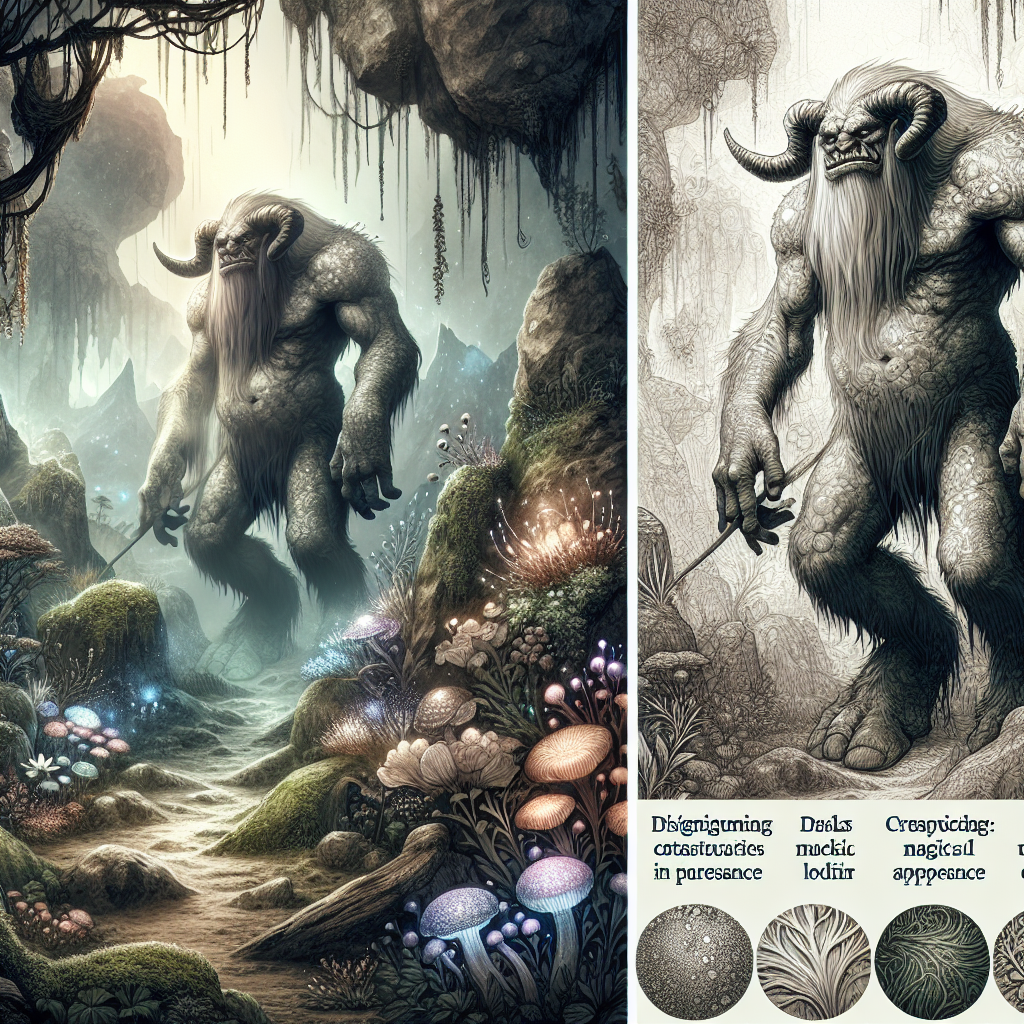
A troll name has one job that most fantasy names do not: it has to sound wrong in a human mouth. The word troll comes into English from Old Norse, where tröll was a loose label for any large, hostile, not-quite-human thing — the same word does duty for giants, ogres and shape-shifters depending on which saga you read. Scandinavian folktales inherited that vagueness, and it is why trolls have never settled into one fixed shape the way elves and dwarves have.
That looseness is a gift when you are naming one. There is no canonical troll language to get wrong. What there is instead is a sound — heavy consonant clusters, a growl in the middle, a hard stop at the end — and the twenty names below are built to sit inside it.
Describe a style, vibe, sound, or theme and we'll tailor the names to it.
Is this what you wanted?
Have a suggestion?
0/500
Popular Troll Names
A selection of troll names from this generator - click any name to copy it:
Grommuk
Thraggar
Vulgaroth
Brakkus
Zarrok
Grimwug
Kragthar
Troggak
Fleshgnaw
Murkshank
Bludgore
Rokthul
Gnashfang
Borknar
Sloggrik
Ragthok
Sharnok
Trollgore
Wurmgrip
Grukkthar
The pool runs on two different naming systems
Read the twenty names in this generator side by side and they split cleanly in half, and the split is worth knowing because it changes what the name tells your players.
The first system is phonetic. Names like Grommuk, Thraggar, Kragthar and Grukkthar carry no meaning in English at all. They are built from a small palette of sounds — the gr- and kr- and thr- openings, a doubled consonant in the middle, and an ending in -uk, -ar, -ok or -ul. These read as a troll’s actual name: what its mother called it, in a language nobody at the table speaks.
The second system is descriptive, and it is in plain English.Fleshgnaw, Bludgore, Gnashfang, Murkshank and Wurmgrip are not names in the same sense. They are what something is called by the people who survived it. A troll does not name itself Fleshgnaw. A village does.
Mixing the two on the same creature is the strongest thing you can do with this list. Grommuk is a name. Fleshgnaw is a reputation. Grommuk, whom the river farms call Fleshgnaw tells your players two facts in six words: this thing has a life of its own, and it has already been a problem for somebody else.
All twenty names in the pool, sorted by which system they belong to
These are the exact twenty names the generator draws from — pool-verified, meaning this is the real list stored on the site and not a sample written for this page. Press the button enough times and you will see all of them and nothing else.
Fourteen to six is a deliberate ratio rather than an accident of writing. Descriptive names are vivid on first hearing and tiring on the fourth; if every troll in your campaign is a Bludgore or a Gnashfang, the register collapses into cartoon. Kept to a minority, they do what they should — mark out the one troll that has a body count.
Vulgaroth sits slightly apart from both groups and is worth calling out: the -oth ending gives it a formality the others lack, which makes it the most usable name here for a troll who talks, bargains, or holds a bridge as a matter of policy rather than appetite.
What the folklore actually says, and what it does not
Two things about trolls are near-universal across the Norwegian and Swedish folktale collections of the nineteenth century, and both are useful at the table.
Trolls are territorial rather than expansionist. The folktale troll is attached to a specific bridge, mountain, or stretch of forest. It does not raid. It waits, because the thing it owns is a place people have to cross. A troll with a name and no location is only a monster; a troll with a name and a bridge is an obstacle your players have to negotiate, pay, trick or kill.
Sunlight is the classic weakness — in several Norwegian tales the troll is caught out at dawn and turns to stone, which is how the landscape gets its explanation for a particular rock. Tolkien used this directly in The Hobbit, which is why most players at your table already expect it.
What the folklore does not supply is a troll language, a troll society, or a naming convention. Anyone who tells you a troll name means something specific in a troll tongue is inventing it. This generator does not pretend otherwise: these names were written to sound right, not translated from anything.
Three ways a homemade troll name goes wrong
1. Too many consonants and no vowel to land on.Grkthzrn is not more troll-like than Grommuk; it is unpronounceable, and a name nobody can say out loud dies the first time your GM tries. Every name in this pool can be said at speed. That is the test.
2. The descriptive name does two jobs at once.Bloodgore Fleshrender is redundant — both halves mean the same thing, so the name carries one piece of information wearing two coats. Pick the body part or pick the verb, not both.
3. The name is borrowed from a specific published setting. Troll naming in Warhammer, Warcraft and D&D each carry strong house styles, and a borrowed name drags its original setting into your game whether you want it or not. The names here are deliberately generic Norse-adjacent rather than pointed at any one franchise.
Questions about troll names
Where do the troll names in this generator come from?
They come from a fixed pool of twenty names that a person wrote and checked, rather than being assembled fresh on each press. A finite pool can be read end to end, edited and kept internally consistent, so every name you see has been looked at by a human. The trade-off is honest: press the button enough times and the pool repeats.
Are troll names based on a real language?
No, and it would be misleading to claim otherwise. The word troll is genuinely Old Norse, and the names here borrow Norse-adjacent sound patterns — hard consonant clusters, doubled consonants, endings in -ar, -ok and -uk. But they are invented sounds, not Old Norse words, and they do not translate to anything.
What is the difference between a troll and an ogre for naming purposes?
In practice, register. Ogre naming in English-language fantasy leans on blunt single words and simple compounds; troll naming leans on longer consonant clusters and a Norse mouth-feel. The folklore distinction is weaker than most players assume — the Old Norse source word covered both — so if a name from this pool suits your ogre, use it.
Should my troll have a descriptive name like Fleshgnaw?
Only if it has earned one. A descriptive name implies a history: somebody survived this troll and told the story. Give it to the troll your players will actually fight, and give the phonetic names to the ones they only hear about. If every troll has a gore-compound name, none of them land.
Can I use these troll names in a published novel or game?
Yes. These are invented compound words with no attribution required. Individual names are not generally protectable. The usual caution applies: avoid names closely tied to an existing commercial setting, which is why this pool stays away from franchise-specific troll naming.
Do I need an account to use the troll name generator?
No. There is no sign-up, no email step and no cap on how many times you press the button. Nothing on this site puts a name behind a form.
Join Our Enchanted Community
Stay connected and embrace the magic of fantasy! Subscribe to our newsletter for updates on tools, tips, and fairy-themed content. Let’s embark on this creative adventure together!
By signing up, you agree to our Terms of Service and Privacy Policy.