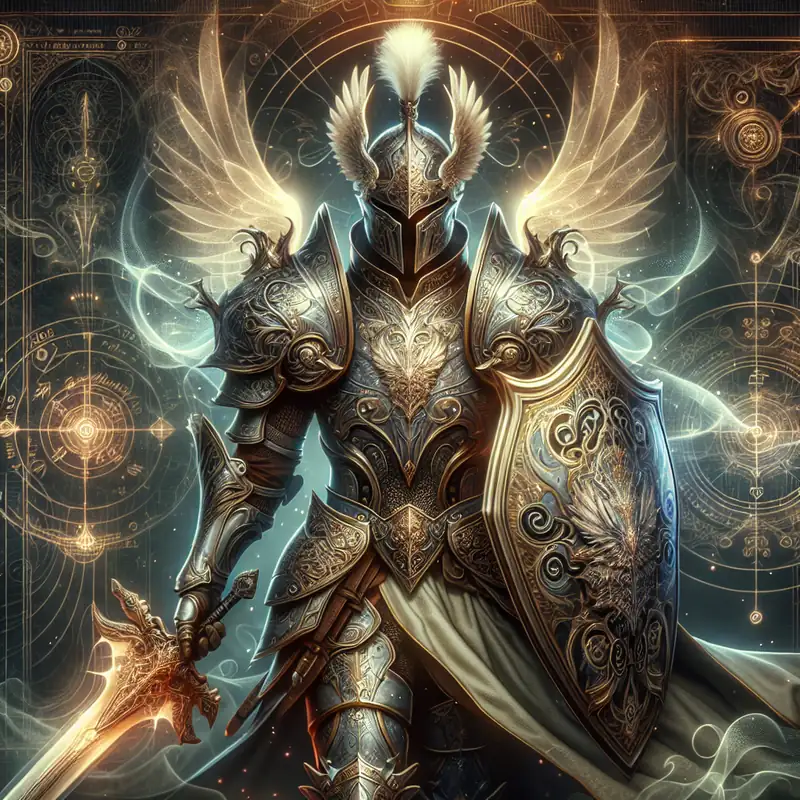
Where paladin names actually come from
Paladin naming is the one area of fantasy naming where you can lean on real history instead of invention, and it is worth doing, because the traditions carry meaning your players already recognise. Almost every convincing paladin name in English-language fantasy draws on one of three real naming traditions — and which one you choose implies which institution raised the character.
That is the organising idea for this page: pick the tradition first, then pick the name.
The three traditions, with pool names
These are drawn live from this generator’s curated pool — pool-verified. They are real names from real traditions, so unlike our constructed-fantasy pools, the origins below are genuine rather than invented.
| Tradition | Pool names | What it implies about the character |
|---|
| Latin / Roman | Aurelius, Cassian, Dorian, Celestine, Vivienne, Felicity, Liora | An organised, hierarchical church with ranks, records and a legal tradition. Reads institutional |
| Biblical / Hebrew | Gideon, Thaddeus, Tobias, Balthazar, Seraphiel | A scriptural faith built on covenant and prophecy. Reads devout, older, more personal than institutional |
| Welsh / Arthurian | Gawain, Emrys, Drystan, Rowena, Isolde | A knightly order bound by oath and land rather than doctrine. Reads chivalric, secular-adjacent |
| Germanic / Norse-adjacent | Alaric, Elysia, Lysandra | A martial order with a warband inheritance. Reads harder and less clerical |
The practical use: if two paladins in your party come from the same order, give them names from the same column. If they are rivals from different churches, put them in different columns and the tension is legible the first time both names are said aloud.
How paladin names are built
Weight beats invention. Paladin names work when they sound like they have been in use for centuries, which is why borrowed real-world names outperform constructed ones here. A paladin called Gideon lands; a paladin called Zyx’thar does not, because the name implies no institution behind it.
Three syllables is the sweet spot. Aurelius, Thaddeus, Balthazar, Celestine, Lysandra. Two syllables reads plain and modern (Dorian, Gawain); four or more starts to read comic. Most of the pool sits at two or three deliberately.
The -el and -iel endings mean something specific. Seraphiel, and names like it, use the Hebrew angelic suffix meaning “of God”. It is the one genuinely meaningful ending in the set, and it signals a character marked or claimed by a divine power — not merely one who serves. Use it for the character with the complicated relationship to their god, and it does that work silently.
Surnames are optional and often wrong. Many knightly traditions used a place or an epithet rather than a family name: Gideon of Ashford, Cassian the Steadfast. If your paladin serves an order that took them in as a child, they may have no surname at all — which is itself a characterisation.
Feminine and gender-neutral paladin names
All four traditions above supply feminine names with the same institutional weight, and they are underused — most name lists for this class default heavily masculine. Pool-verified feminine options: Elysia, Lysandra, Isolde, Rowena, Celestine, Vivienne, Liora, Felicity. Of these, Isolde and Rowena carry the Arthurian charge, Celestine and Vivienne the Latin-institutional one, and Liora the scriptural one.
For gender-neutral names with the right register, the Latin and Welsh columns are the most usable: Emrys, Dorian, Cassian and Drystan all read comfortably in any direction while still sounding like they belong to an order. Emrys in particular carries genuine Welsh usage across genders.
Three mistakes worth avoiding
Naming the paladin after the virtue they embody. Sir Justice, Lady Valour. It flattens the character into a label, and paladins are most interesting where they fall short of the label. Let the name be a name and the oath do the thematic work.
Mixing traditions inside a single name. Thaddeus Gawainson reads as two different worlds stapled together. Pick a column and stay in it for a given order.
Reaching for the same five names. Arthur, Roland, Percival and Lancelot arrive with so much baggage that your character spends the campaign in someone else’s shadow. The Arthurian column is deep — Emrys, Drystan, Rowena and Isolde are as authentic and far less claimed.
Related generators
Naming the rest of the order? The cleric name generator covers the clergy alongside them, the NPC name generator covers everyone else in the chapter house, and the classes index lists every class generator we run.
How these names are made
Every name on this page comes from a hand-curated pool held on our own server, not generated fresh on each click from a text prompt. Pools are drafted, then reviewed by a person: entries are culled, corrected for sound, and screened so that trademarked and protected names from published settings are excluded — and anything that does slip in is removed and added to a blocklist so it cannot come back. The generator is free, requires no account and no email address, and we do not put names behind a signup.
Where this page describes what a name means, it does so only for names drawn from real historical traditions. For constructed fantasy names we describe sound and register instead, because inventing etymologies for made-up words would be misleading.
Frequently asked questions
What makes a name sound like a paladin rather than a fighter?
Institutional weight. Paladin names read as though an organisation has been using them for centuries, which is why real Latin, Biblical, Welsh and Germanic names work better here than invented ones. A fighter can be called anything; a paladin’s name should imply the body that trained them.
Should a paladin have a surname?
Not necessarily. Many knightly traditions used a place name or an epithet instead — Gideon of Ashford, Cassian the Steadfast. A paladin raised by their order from childhood might have no family name at all, which is a characterisation in itself.
What do the -el and -iel endings mean?
They come from the Hebrew angelic suffix meaning “of God”. Unlike most fantasy name endings, this one carries genuine meaning, and it reads as a character claimed or marked by a divine power rather than simply serving one.
Are these paladin names free to use?
Yes. Use them in home games, published adventures and fiction — no account, no signup, no attribution required.