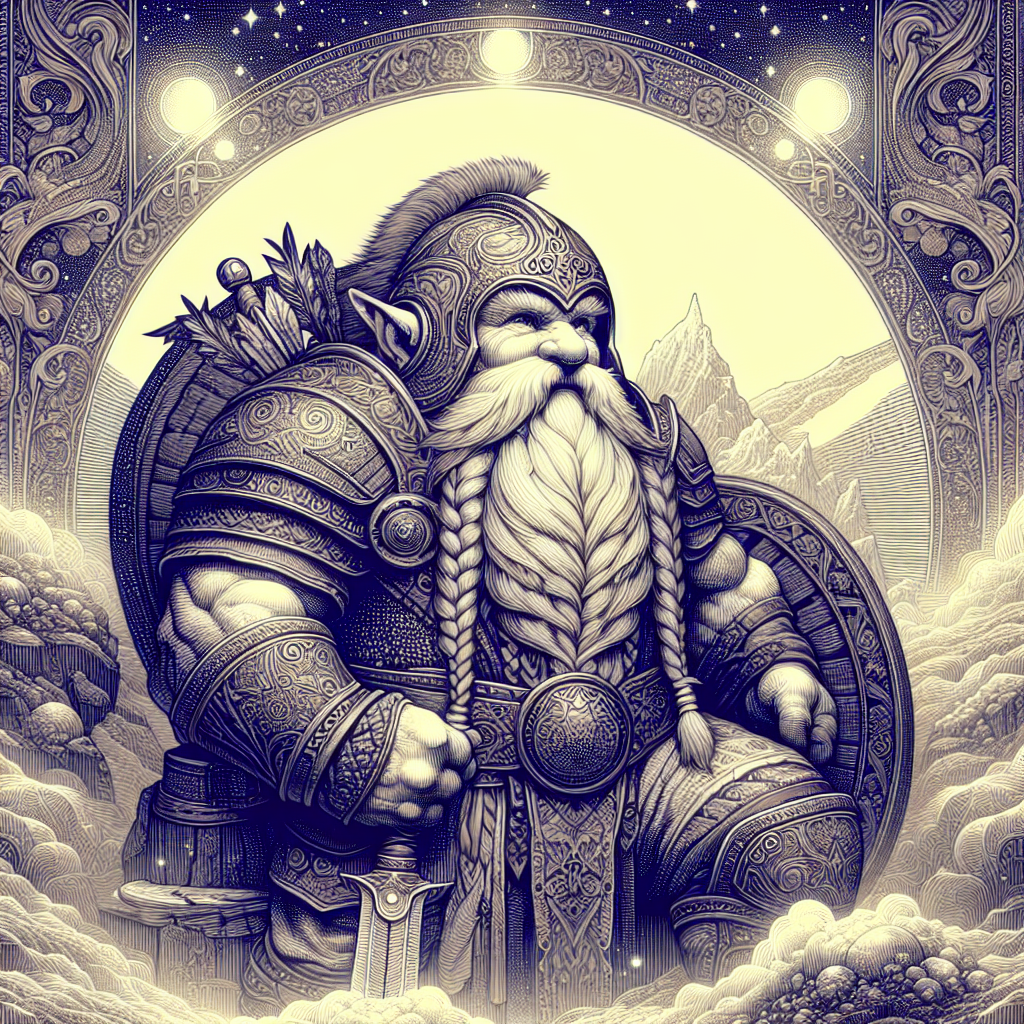
More Dwarf Names, Grouped by Style
Dwarf names have the most recognizable sound in fantasy: short, consonant-heavy, and struck like an anvil — Thrain, Kragmar, Bromnar. The trick is keeping that sound while avoiding the same twelve names every campaign reuses. Below are 110+ dwarf names organized by style — classic, battle-forged, female, clan names, Norse roots, and the darker names of the exiled — so you can pick one that fits the dwarf in front of you. Need more in a specific vein? The dwarf name generator draws from a curated pool you can pull from at random, and the full generator directory covers every other race in your party.
Warrior & Battle-Forged Names
For shieldbearers, oath-keepers, and the dwarf who holds the line. Harder stops, heavier endings.
- Grimbold
- Thorgar
- Ulfgar
- Brokkr
- Hargin
- Dolgrin
- Kazmuk
- Orsik
- Thundrik
- Balrik
- Karngar
- Morgran
- Vondal
- Gruldan
- Harbek
- Torvald
- Drakmar
Female Dwarf Names
Same iron, different ring — often one syllable softer, never fragile. These fit smiths, priests, and queens alike.
- Dagnal
- Helja
- Kathra
- Vistra
- Eldeth
- Riswynn
- Torbera
- Gunnloda
- Bardryn
- Diesa
- Hlin
- Ilde
- Liftrasa
- Sannl
- Torgga
- Falkrunn
- Mardred
- Audhild
Dwarf Clan & Last Names
Clan names are résumés: what the family mines, forges, or once did in battle. Pair any of these with a first name above.
- Stonehammer
- Ironfist
- Battlehorn
- Copperkettle
- Deepdelver
- Fireforge
- Frostbeard
- Goldvein
- Granitehide
- Hammerfall
- Rockseeker
- Runecarver
- Silveraxe
- Steelgrip
- Thunderbrand
- Bronzebrow
- Emberbraid
- Cragborn
Norse-Inspired Dwarf Names
The oldest vein of all — names drawn from the Norse tradition that shaped every fantasy dwarf since. Use these for ancient ancestors and runic inscriptions.
- Alviss
- Andvari
- Brokk
- Dvalin
- Eitri
- Fjalar
- Galar
- Hreidmar
- Litr
- Nordri
- Sudri
- Austri
- Vestri
- Regin
- Sindri
- Mjodvitnir
- Nyr
- Frosti
Dark & Exiled Dwarf Names
For the deep-delvers who went too far down, oathbreakers, and grim survivors of lost holds. Harsher vowels, colder edges.
- Murdin
- Grelkor
- Thargul
- Drovok
- Karrgan
- Ulmach
- Zundrel
- Morgrym
- Durzol
- Krevmar
- Volgrin
- Skarnak
- Gromdal
- Thexil
- Rundak
- Vermund
- Ashfist
- Blackvein
How to Choose a Dwarf Name That Fits
Three quick tests: (1) Say it in armor — a dwarf name should survive being bellowed across a battlefield; if it takes more than three syllables, shorten it. (2) Match the hold — names cluster by clan and mountain, so a dwarf of the Frostbeard hold shouldn’t sound like one from the desert forges without a story behind it. (3) First name + clan name — the pairing does half the characterization for you: Dagnal Copperkettle and Dagnal Blackvein are two very different dwarves. If your dwarf travels with a mixed party, the elf name generator and the wizard names list keep the rest of the roster consistent.
Which of these names are older than Tolkien, and which were invented last Tuesday
Dwarf naming is the one corner of fantasy where the borrowed names are older than the genre. Elvish naming runs the other way — the “authentic” elvish elements are Tolkien’s own inventions, and everything since is drift. Dwarves are the inversion: the names that feel most canonically dwarven are Old Norse, they predate The Hobbit by roughly seven hundred years, and Tolkien lifted them more or less wholesale.
The source is the Dvergatal, the “catalogue of dwarves” embedded in Völuspá in the Poetic Edda — a stretch of verse that is essentially a list of dwarf names and nothing else. Tolkien took the company in The Hobbit straight out of it: Thorin, Dvalin, Bifur, Bofur, Bombur, Nori, Ori, Oin, Gloin, Dori, Fili, Kili, Thrain, Durin. He even took Gandalfr, which sits in the same list and means something close to “wand-elf.” This is why Norse-sounding names read as dwarven to modern ears with no explanation required: the association was set in the thirteenth century and reinforced in 1937, and your reader has absorbed it whether or not they have read either text.
Knowing which category a name falls into is practical, not trivia. It tells you how much weight a name is already carrying before you use it.
Durin and Thrain are both Dvergatal names. They are public domain and free to use, but they arrive pre-loaded: a large share of your readers will hear Tolkien rather than the Edda, and a dwarf king called Durin is making a promise about your setting that you will have to keep. Use them when you want the resonance. Avoid them when you want the character to be their own.
Why dwarf names sound the way they do
The dwarven register is the most mechanically describable in fantasy, which makes it the easiest to get right and the easiest to get lazily wrong.
- Hard stops, front and back. B, d, g, k, t. Nearly every name on this page opens on one. Elvish names avoid these; dwarven names are built on them.
- Consonant clusters in the middle. -gm-, -ldr-, -rgn-, -lgr-. The cluster is what makes the name feel struck rather than spoken, and it is the single feature most often missing from a name that “does not sound dwarven enough.”
- One or two syllables, stressed at the front. THRAIN, KRAG-mar, BROM-nar. This is the exact opposite of the elvish pattern, where the stress falls on the second syllable and length signals rank. Put the two side by side in a scene and the contrast does your worldbuilding for you.
- No decorative apostrophes, ever. They belong to a different tradition entirely and they make a dwarf name look imported from the wrong shelf.
These 93 curated names are hand-picked, not generated. The names in the generator above come from this site’s finite, hand-checked dwarf pool — every one verified free of protected intellectual property.