Elf Name Generator

Seventeen hand-checked elf names, generated instantly. No account, no email, no paid tier — click a name to copy it, tap the star to keep it. Below the generator, a working guide to how elvish names are actually built: which word-elements are Tolkien’s and which are not, why an elf needs three names rather than one, and the three mistakes that make a homemade elf name read as fake.

Elf Names

Generate names for elf:

Generated Names:

Lysandriel Sylvandriel Nenluin Isilme Thalindra Faelion Caelumil Vaelthir Aelarion Elaris Selunara Aryndor Tiriel Galadwen Yavendil
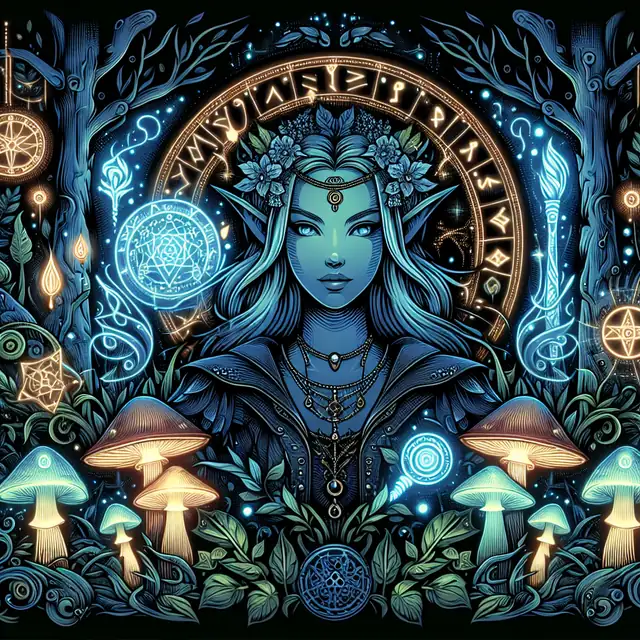
Fantasy Elf character illustration for Elf name generator

Want something specific?

Describe a style, vibe, sound, or theme and we'll tailor the names to it.

Is this what you wanted?

Have a suggestion?

0/500

Elf subrace name generators

Sound before meaning

An elvish name is judged by ear first. Liquid consonants, open vowels, soft endings, stress early in the word. Get the sound palette right and an invented element passes without comment; get it wrong and no amount of backstory rescues it.

Say it out loud, every time

The test that catches most bad names costs four seconds: read it aloud. If it takes effort to pronounce, your group will not use it — they will call the character “the elf” for the whole campaign. Two or three syllables survives; five does not.

Consistency inside the family

Names matter less individually than as a set. Siblings, a house, a village should share a palette. A deliberate break from that palette is one of the cheapest pieces of characterisation available — provided you can say why it happened.

The Significance of Elven Names

Elven names carry deep significance in fantasy lore. They often reflect the character’s personality, lineage, and even destiny. In many stories, these names are more than mere labels; they are imbued with history and magic. Understanding the roots and meanings of elven names can enrich your storytelling and help immerse your readers in a fully realized world. As you explore our tools, consider how these names can shape your characters and narratives.

Who Are Elves in Fantasy Lore?

Elves are immortal beings tied to nature, magic, and ancient wisdom. Known for their agility, grace, and pointed ears, they appear across worlds from D&D to Tolkien, Elder Scrolls, and beyond.

With their pointed ears, luminous eyes, and innate grace, elves often serve as scholars, archers, rangers, or mages in fantasy narratives. Their cultures are rich with elven languages, ancient naming customs, and a deep reverence for forests, stars, and time.

Elven Subraces & Naming Themes

High Elves: Regal, wise, and powerful. Often bear melodic, noble names.

Wood Elves: Free-spirited and attuned to forests. Names reflect natural elements.

Dark Elves (Drow): Shadowy and cunning. Names carry harsher consonants and mystical undertones.

Half-Elves: Blending human and elven traits, their names may bridge both cultures.

Whether you’re creating a noble High Elf, a cunning Dark Elf, or a wild Wood Elf β€” your name should reflect the soul of your character.

Sample Elf Names List

TypeName Examples
MaleEldarion, Faelar, Thamior
FemaleAriessa, Lyndis, Eleniel
UnisexRhovan, Telrin, Vanyel
SurnamesMoonwhisper, Silverbranch, Galathil
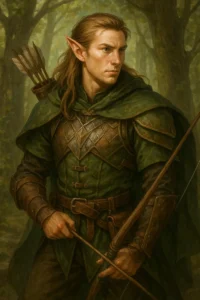
Elf one holding bow and arrow in woods
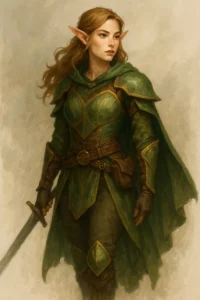
Sword-wielding female elf character art
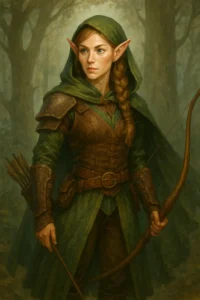
Female elf holding a bow in a forest
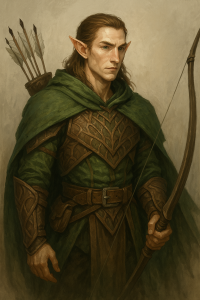
Elf holding a bow with a quiver of arrows

Common Questions

Find answers to your most pressing questions here.

Press the generate button and the tool draws from a hand-checked pool of elf names. Click any name to copy it to your clipboard, or tap the star beside it to keep it in your saved list. There is nothing to sign up for.

They come from a finite, curated pool that a human has read through, rather than being assembled letter-by-letter at random. That is why they sound like they belong to one language. The pool is checked for names that are lifted verbatim from copyrighted fiction, and those are removed.

It is free, there is no account, no email is ever requested, and there is no paid tier. Saved names are kept in your own browser, not on our servers.

This generator draws from seventeen curated elf names. The subrace generators hold their own pools — eighteen high elf names, seventeen wood elf, thirty-seven dark elf and twenty half-elf. A finite pool is a deliberate trade: fewer names, but every one of them has been read by a person.

Liquid consonants, open vowels, soft endings, and no hard stop at the end of the word. Meaning helps but sound decides. An element invented this morning will pass as elvish if it obeys those rules; a real Sindarin word will not if you spell it with a hard consonant cluster.

Yes. They are names, and names are not copyrightable. We actively remove names taken verbatim from protected fiction so you are not handed one by accident.

Need answers to other queries?

If your questions haven’t been answered, feel free to reach out! Our team is always here to assist you in creating the fantasy stories and worlds you’ve dreamed of.Β  And our names have D&D 5e-compatible styles. Let’s dive into your imagination together.

Share the Magic!

Spread your elf name on social media with just one click!

Subscribe for Updates

Why every elf name you have ever read sounds like a cousin of every other one

Read twenty elf names in a row — from a novel, a rulebook, three different generators — and they all feel like they came out of the same family. That is not laziness on anyone’s part. It is because almost every elvish name in modern fantasy is built the same way: out of a small stock of recurring word-pieces, recombined. Learn the pieces and you stop guessing at elf names and start assembling them.

The stock comes from Tolkien, who did not invent elvish names so much as invent two elvish languages and then let the names fall out of them. Sindarin and Quenya have real morphology, which means their names are compounds with parts you can point at. Everyone who came after inherited the sound and kept the habit.

The pieces that are actually Tolkien’s

These are attested elements with known meanings. If you build with them, your names will be internally consistent, and a reader who knows the languages will find them defensible rather than embarrassing.

  • el–, elen– — star. The single most productive element in the whole tradition (Elrond, Elendil).
  • isil–, ithil– — moon.
  • gal–, galad– — light, radiance.
  • sil– — to shine white (as in Silmaril).
  • calen– — green.
  • nim– — white.
  • lór– — dream, slumber (as in Lórien).
  • aer– — sea.
  • thal– — steadfast, stalwart.
  • –dor — land.
  • –wen — maiden. A feminine ending, and a reliable one.
  • –iel — daughter. –ion — son.
  • –dir — man.

The pieces that are not Tolkien’s, and why they still work

A great deal of what circulates as “elvish” — vae–, syl–, nym–, zeph–, –ara, –ith — is not Tolkien at all. Some of it is Greek by way of nineteenth-century romantic poetry, some of it is forty years of tabletop drift. It sounds elvish anyway, because it obeys the same phonotactics: liquid consonants (l, r), soft fricatives, open vowels, no hard stops at the end of a word, stress that falls early and trails away.

That is the actual rule, and it is worth stating plainly: elvish names are defined by their sound rules more than by their vocabulary. You can invent a brand-new element and nobody will blink, provided it does not end in a hard consonant and does not cluster more than two consonants together. Invent Grakt and it reads as orcish no matter what you claim it means.

What is inside the seventeen names in this generator

The elf generator on this page draws from a finite, hand-checked pool of seventeen names. Every name below is pool-verified — it is literally in the pool, not an example we made up for the article. Here is what several of them are made of, so you can see the system working:

  • Elensarelen, star, plus a masculine-feeling ending. A star-name.
  • Isilmeisil, moon, with a soft trailing vowel. Two syllables, nothing wasted.
  • Galadwengalad, light, plus –wen, maiden. “Light-maiden,” and transparently so.
  • Nenluinnen, water, plus luin, blue. A water-name that closes soft.
  • Thalindrathal, steadfast, in a feminine frame.
  • Lysandriel and Tiriel — both close on –iel, daughter.
  • Aelarion and Faelion — both close on –ion, son.
  • Aryndor — ends in –dor, land. A name that claims a place.

The remaining names in the pool — Caelumil, Melianora, Selunara, Elaris, Vaelthir, Sylvandriel, Yavendil — are built on the post-Tolkien stock rather than the attested one. They follow the sound rules; they do not carry dictionary meanings. Both kinds belong in a working name pool, and it is worth knowing which you are holding.

An elf outlives their own name, and that is the most useful thing about them

Here is the structural fact that separates elf naming from every other race, and it gets skipped in almost every guide: elves live long enough that one name cannot cover a life.

Tolkien’s elves carry several. A father-name given at birth. A mother-name, given later, often carrying a note of foresight about who the child will turn out to be. A name they choose for themselves as adults. And an epessé — an after-name, given by other people, which is the one history usually remembers. In most tabletop settings the same idea appears in simplified form: a child-name that is affectionate and slightly ridiculous, then an adult name chosen around the first century, when the elf has decided who they are.

So do not give your elf a name. Give them a name history:

  1. The birth name — chosen by a parent, so it says more about the parent’s hopes than the elf’s character. Often the most conventional of the set.
  2. The chosen name — taken as an adult. This is where a character’s actual self-image lives. An elf who chose Isilme is telling you something different from one who chose Vaelthir.
  3. The after-name — what others call them, and the only one they do not control. Usually earned by a single event, often the one they would rather forget.

Three names generated in ten seconds, arranged in that order, produce more character than an hour of backstory writing. It also solves the awkward problem of the elf who has been alive for four centuries and has apparently done nothing worth being called anything for.

Subrace palettes: the same language, four accents

Elf subraces are not different languages. They are the same sound system leaning in different directions, and the lean is the whole point.

High elves

Formal, longer, more vowels, more of the attested Tolkien elements. High-elf names are the ones that sound like they were written down somewhere official. Elandir, Galadion, Aelindor. If a name feels slightly too grand for daily use, it is probably a high-elf name. High elf name generator.

Wood elves

Shorter, softer, more likely to carry a plant, animal or weather element and less likely to carry a title. The register is spoken rather than inscribed. Sylvaris, Nymira, Elunara. Wood elf name generator.

Dark elves and drow

This is the subrace where the convention genuinely diverges. Drow naming in the Forgotten Realms tradition runs harder and colder than the rest of the family — z and zh sounds, doubled consonants, abrupt endings, and a heavy reliance on house names, because in a matriarchal society your house is the important half of your name. If you want names that read as drow rather than as elves in darker clothing, start at the drow names page. Dark elf name generator.

Half-elves

The interesting case, because a half-elf name is a record of which side of the family did the naming. A half-elf called Naerwen was named by the elven parent; a half-elf called Tom was not. That single choice tells a reader which world claimed the character. Half elf name generator.

The three ways homemade elf names go wrong

Every one of these is common, and every one is avoidable in about four seconds.

1. The decorative apostrophe

Ael’thonor. There is no apostrophe anywhere in Sindarin or Quenya. In fantasy convention the apostrophe signals a glottal stop, which is a harsh sound — it belongs to drow, orcs and demon-tongues. Putting one in a wood-elf’s name is like putting a growl in a lullaby. If a name feels flat without the apostrophe, the name is flat; the punctuation was doing the work.

2. The English word with an elvish prefix

Elshadow, Elsilver, Aelstorm. The reader’s eye reads the English word first and the whole illusion collapses. If you want a name to mean “silver,” use an element that means silver in your language, not the English word wearing a hat.

3. Length creep

Most memorable elvish names are two or three syllables. Elrond. Legolas. Arwen. Five-syllable names read as parody, and worse, nobody at the table will say them out loud — they will call your character “the elf” for the entire campaign. Say the name aloud before you commit to it. If it takes effort, it will not survive contact with a group of people.

The bonus mistake: mixed palettes

An elven family where one sibling is Thalindra and another is Kaz is not a nice touch, it is a mistake — unless you can say why, in which case it is the best detail on the page. Consistency inside a group matters more than any single name being clever, and a deliberate break from it is a story.

Where to go next

Related tools and reading: the elf names list, the full races index, the general fantasy name generator, our guide to naming a fantasy world, and the ranger name generator for the elf who spends more time in the trees than at court.
More Elf Names, Grouped by Style

Elves carry the oldest names in most fantasy settings β€” names meant to sound like they have outlived kingdoms. The best ones share a common grammar: open vowels, liquid consonants, and a rhythm that feels sung rather than spoken. This curated list collects 110+ elf names organized by style, from courtly high elf names to earthy wood elf names, drow-flavored dark elf names, and elven family names to complete a full identity. Every name here works for D&D characters, novels, or any world of your own β€” and if none of them is quite right, the elf name generator will keep producing curated options until one fits.

Popular Elf Names

The most-requested names from our curated elf pool β€” balanced, versatile, and usable in almost any setting.

  • Lirael
  • Nimrodel
  • Aerendyl
  • Celebrieth

High Elf Names

Formal, ornate names for ancient courts, arcane academies, and noble houses.

  • Aelrindel
  • Caelthas
  • Elandorr
  • Ilphara
  • Kyrenil
  • Loralith
  • Morthil
  • Naevys
  • Othorion
  • Pyrrhian
  • Quildor
  • Rennyth
  • Sythaeryn
  • Thalanil
  • Uevareth
  • Vaeril
  • Wysarion

Wood Elf Names

Shorter, nature-rooted names for rangers, druids, and forest realms.

  • Ashryn
  • Briaren
  • Caeda
  • Elowen
  • Faelwen
  • Fenlith
  • Ilyrana
  • Lathai
  • Nylathria
  • Olyra
  • Panlos
  • Quarion
  • Sariel
  • Sylvara
  • Tanavir
  • Thiala
  • Werendil
  • Wrenna

Dark Elf Names

Harder consonants and shadowed sounds for drow, exiles, and underground cities.

  • Balvyr
  • Draveth
  • Ilzarra
  • Khaelis
  • Maelrix
  • Nyxrae
  • Orvassa
  • Qilzress
  • Szarvin
  • Tebrylla
  • Uldrissa
  • Vexryn
  • Vhaeryn
  • Xulviir
  • Yasrena
  • Zarvyn
  • Zilvrae
  • Nezrith

Female Elf Names

Melodic names that suit everything from warrior-poets to queens regnant.

  • Aelwyn
  • Amarielle
  • Cyrathil
  • Eiravel
  • Faenya
  • Gwynara
  • Iolenna
  • Kaelira
  • Liriene
  • Maerwen
  • Nimriel
  • Olyndra
  • Phaelia
  • Ravariel
  • Seleneth
  • Thessalia
  • Vaelora
  • Ysolde

Elven Surnames & House Names

Pair any first name above with a family or house name to finish the character.

  • Silverfrond
  • Dawnstrider
  • Starweaver
  • Nightbreeze
  • Swiftbrook
  • Gladewalker
  • Frostpetal
  • Sunshadow
  • Willowsong
  • Brightspire
  • Mistvale
  • Thornweald
  • Everbloom
  • Windmere
  • Ashenbough
  • Duskmere
  • Larkwhisper

How elven names are constructed

If the lists above have not turned up the right name, it is worth understanding the pattern underneath them, because elven naming is more systematic than most fantasy traditions and you can build to order once you see it.

Nearly every convincing elf name is built from a small set of components: an opening vowel or soft consonant (Ae-, El-, Sy-, Th-, Va-), a liquid middle carrying l, r, n or m, and a trailing syllable that decides the register (-iel, -wen, -dor, -ath, -mil, -ara). Aelarion, Thalindra, Selunara and Sylvandriel are all this shape. The reason it works is that liquid consonants and open vowels slow a name down when spoken, and that slowness is what reads as ancient.

Which elf are you naming?

Subrace should change the sound, not just the backstory. High elves take the longest and most formal shapes β€” three syllables minimum, ceremonial endings, often a house name attached. Wood elves shorten everything; the same character in a forest community is Faelar rather than Faelarion, because a name shouted across a canopy gets clipped. Dark elves should sound genuinely different, not merely darker β€” a distinct set of consonants rather than a high-elf name with a sinister ending pasted on. This is the most common failure in elf naming and it is worth taking seriously.

Use the dedicated generators for each: high elf, wood elf, dark elf and half-elf.

Saying it out loud

Elven names are the ones most often abandoned mid-campaign, and almost always for the same reason: the player chose something beautiful on the page that is awkward in the mouth. Before committing, say the name three times quickly, then say it in a sentence where somebody is interrupting you. Sylvandriel survives that test; a name with two adjacent unfamiliar vowel clusters usually does not.

A practical compromise many players use is a formal full name for documents and introductions, and a two-syllable short form for actual play. Melianora becomes Mel. Aelarion becomes Ael. Decide the short form yourself β€” the table will invent one otherwise, and it may not be the one you wanted.

Half-elves and elves raised elsewhere

An elf raised outside elven society should carry a name that shows it. The most efficient way to signal a complicated upbringing is a mismatched pair β€” an elven given name with a human surname, or the reverse β€” because the mismatch implies two households without a word of backstory. A half-elf called Aerendyl Cooper has a whole history in two words.

Keep Building Your World

A name is only the start. Generate more with the elf name generator, find rivals in the dwarf names list, place them somewhere worth defending with city names, or browse all name generators.

Most convincing elf names use three parts: a soft opening (Ae-, El-, Sy-, Th-), a middle carrying liquid consonants such as l, r, n or m, and a trailing syllable that sets the register β€” -iel and -wen read lyrical, -dor and -thir read martial, -mil and -mir read old. The open vowels and liquid consonants slow the name down when spoken, and that slowness is what makes it sound ancient.

They should use a different consonant set, not a high elf name with a darker ending attached. Changing only the ending is the most common mistake in elf naming and it makes the two cultures sound like one culture in different moods.

It usually helps. Keep the full formal name for introductions and documents, and pick your own two-syllable short form for everyday use β€” Melianora to Mel, Aelarion to Ael. If you do not choose one, the table will choose for you.

These 92 curated names are hand-picked, not generated. The names in the generator above come from this site’s finite, hand-checked elf pool — every one verified free of protected intellectual property.

Related Name Generators

Every generator below draws from its own finite, hand-checked pool: High Elf Name Generator · Wood Elf Name Generator · Dark Elf Name Generator · Half-Elf Name Generator · Fae Name Generator · Fairy Name Generator · All Race Generators