Fairy Name Generator

A fairy name is not really a name. In almost every tradition these creatures were borrowed from, the fairy’s real name is the one thing it will not hand over — because a name is a handle, and a handle is how you get hold of something. What people were given instead was a nickname: a description, a joke, a polite way of referring to something you would rather not summon. Every name in this generator sits in that nickname layer, and once you see it that way the naming problem gets much easier to solve.

The generator below draws from a fixed pool of twenty fairy names that a person wrote and checked, not an endless stream. Press it, take what you like, ignore the rest. There is nothing to sign up for and nothing to unlock. Below the tool, this page breaks down all twenty names so you can see exactly how they are built — which is more useful than another list, because once you can see the machinery you can build your own.

Fairy Names

Generate names for fairy:

Generated Names:

Sprinkledew Fizzlebloom Nimblefoot Glimmerlark Twilight Fizzlefern Lunaria Dappledawn Glitterglow Wispwhirl Bumbleberry Fluffdancer Thistle Moonshadow Dewdrop Wispwhistle Bramble Blossomwhisper Twirlybee Puddlefluff Frolic Featherflick Lullaby Dreamdancer Cloverlark Faecheer Pip Willowglen Jasmine Winklewing
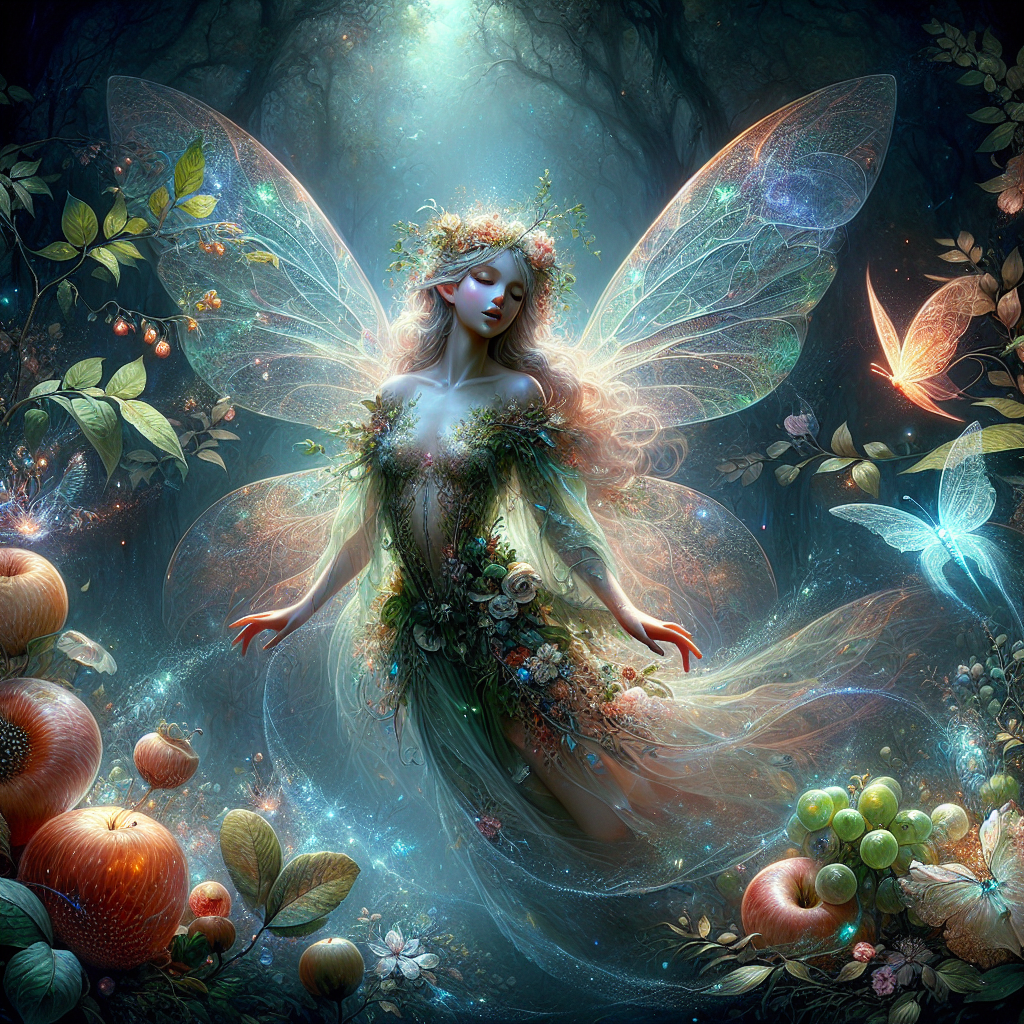
Fantasy Fairy character illustration for Fairy name generator

Want something specific?

Describe a style, vibe, sound, or theme and we'll tailor the names to it.

Is this what you wanted?

Have a suggestion?

0/500

What a fairy name is actually hiding

The folklore is unusually consistent on this point. Across Irish, Welsh, Scottish and English tradition, people avoided naming the fairies directly. They said the Good Neighbours, the Gentry, the Fair Folk, or in Welsh Tylwyth Teg — the fair family. These are not names. They are flattering circumlocutions, said out loud by people who believed the subject might be listening and would take offence at anything blunter.

The same instinct runs the other way in the tales. Rumpelstiltskin is a story whose entire plot is a name: learn it, say it, and the creature loses. That is the folk logic in its clearest form — the true name is power, so the true name stays buried, and what circulates is a label.

Shakespeare formalised the label layer and everyone since has copied him. The fairies attending Titania in A Midsummer Night’s Dream are called Peaseblossom, Cobweb, Moth and Mustardseed: not grand names, but small household and garden things. Robin Goodfellow — Puck — is literally a friendly nickname for something that was not remotely friendly. Three hundred years later Cicely Mary Barker’s Flower Fairies ran the same trick again, naming each fairy after the plant it belonged to.

So here is the practical move for your own worldbuilding. Give your fairy the sweet compound nickname — then decide what the nickname is covering. A creature called Sprinkledew Fizzlebloom that turns out to trade in stolen years is far more interesting than a creature called Nightblade Shadowthorn that turns out to be dangerous. The gap between the label and the thing is where the story is. Fairy names are the only naming tradition on this site where the name is supposed to be slightly misleading, and most people write them as though it were supposed to be accurate.

All twenty names in this pool, sorted by what they are made of

These are the exact twenty names the generator draws from — pool-verified, meaning each one is in the live pool right now, not an example invented for this article. Nearly all are two-part compounds: a first element that does the identifying, and a second element that does the music. Sorting them by their first element shows you the four or five wells this kind of name is drawn from.

Water and weather (4 names)

Sprinkledew Fizzlebloom · Dewdrop Wispwhistle · Twirlybee Puddlefluff · Poppy Dewspark

Dew is doing a lot of work here, and it is not an accident. Dew is the fairy-adjacent weather event: it appears overnight, without anyone seeing it happen, and it is gone by mid-morning. Names built on it carry that implication of something that was here and now is not. If you want a fairy who is associated with mornings, thresholds, or things that do not last, this is the well to draw from.

Green and growing things (8 names)

Tansy Twinkletop · Bramble Blossomwhisper · Cloverlark Faecheer · Pip Willowglen · Thistle Moonshadow · Jasmine Winklewing · Bumbleberry Fluffdancer · Petalbright Hushwisp

This is the largest group in the pool and the most directly descended from Shakespeare and Barker. Note that the plants split into two moods: the soft ones (jasmine, clover, poppy, blossom) and the ones with defences (bramble, thistle). Tansy and Thistle are the two names here that would sit comfortably on a hostile fairy, purely because of what the plants do to you. If your fairy is meant to have an edge, pick a plant that scratches.

Light and sparkle (4 names)

Glitterglow Wispwhirl · Fizzybelle Starpetal · Merryglow Fizzlespark · Nimblefoot Glimmerlark

The most modern group, and the one most likely to read as saccharine if you are not careful. It works best when the light in the name is the lure — the will-o’-the-wisp is, after all, a light that leads travellers into bogs, and Wispwhirl sits one letter away from that idea. Use these for a fairy whose first impression is the trap.

Night and sleep (3 names)

Lunaria Dappledawn · Twilight Fizzlefern · Lullaby Dreamdancer

These three are the only names in the pool that reach for a Latinate or formal register — Lunaria in particular sounds like a species designation rather than a nickname. That makes it the most usable name here for a fairy of rank, or for one who is old enough that the nickname has hardened into a title.

Pure motion (1 name)

Frolic Featherflick

The odd one out, and worth pointing at for that reason: it is the only name in the pool whose first element is a verb. Every other name identifies the fairy by an object or a condition; this one identifies it by what it is doing. Verb-first is the least-used and most underrated construction in fairy naming, and it is the easiest way to make a name that does not sound like the other nineteen.

Three ways a homemade fairy name goes wrong

1. Both halves do the same job. The commonest failure. Glitterspark Shimmerglow has four elements that all mean “shiny”, so it carries no information and reads as noise. Look at the pool above: the working names pair unlike things. Thistle and Moonshadow are not the same category. Bumbleberry and Fluffdancer are not the same category. One half should say what it is; the other half should say how it moves or sounds.

2. It cannot be said quickly. These names get spoken at a table, often by someone who is also holding dice and losing their place. Four syllables in the first element is usually one too many. Notice how many names in the pool open with a single hard syllable — Pip, Tansy, Poppy, Thistle, Bramble, Frolic. That is what a name sounds like when it has survived being used.

3. It is menacing on purpose. The instinct to name a dangerous fairy something dark is the instinct to throw away the tradition’s best feature. The whole point of the euphemism layer is that the Good Neighbours were not good neighbours. A cruel fairy called Merryglow is doing something a cruel fairy called Dreadthorn cannot do. If your creature is frightening, let the name be the part that lies.

Fairy, fae, or changeling — which generator you actually want

Three generators on this site sit close together and get confused constantly. They are not interchangeable, and picking the wrong one is the most common reason a name feels off.

Fairy — this page. Small-scale, nickname-register, compound names built from garden and weather words. Best for sprites, pixies, flower spirits, familiars, and anything meant to be underestimated. The register is deliberately light.

Fae — the courtly end of the same family. Names like Eldrin Willowshade and Nimue Silverleaf carry a surname and a lineage; they sound like something with a seat at a court and an interest in contracts. If your creature bargains, it wants a fae name, not a fairy one.

Changeling — the shapeshifter, the swapped child, the thing wearing a face that is not its own. A different problem entirely, because a changeling’s name has to be borrowable.

If you are naming an elf rather than a fairy, the elf name generator is the one you want — that tradition descends from Tolkien’s constructed languages and follows quite different rules. For a full map of what exists here, see all race name generators or the complete list of name generators. If you are naming the wood the fairy lives in rather than the fairy, try the forest name generator, and if you are building the setting around all of it, how to name a fantasy world covers the wider system.

Questions about fairy names

Where do the fairy names in this generator come from?

They come from a fixed pool of twenty names that a person wrote and checked, rather than being assembled fresh each time. That is deliberate: a finite pool can be read, edited and kept consistent, so every name you see has been looked at by a human. The trade-off is that the pool repeats if you press the button enough times.

What makes a good fairy name?

Two halves that do different jobs. One element identifies the fairy with a concrete thing, usually a plant, a weather event or a light; the other supplies the music through movement or sound. Thistle Moonshadow works because thistle and moonshadow are unlike each other. Glitterspark Shimmerglow fails because every element means the same thing.

Should a dangerous fairy have a dark-sounding name?

Usually not. In the folklore these names come from, the sweet label is the disguise. People called them the Good Neighbours and the Fair Folk precisely because they were neither, and giving a cruel fairy a cheerful name reproduces that effect. A name like Dreadthorn tells the reader everything on first meeting and throws away the tradition’s best device.

What is the difference between a fairy name and a fae name?

Register and scale. Fairy names sit in the nickname layer: compound, garden-sized, often faintly comic. Fae names are courtly, carry a surname and imply lineage and rank. If your creature makes bargains and holds a title, use the fae name generator instead.

Can I use these fairy names in my published work?

Yes. The names in this pool are ordinary compound words and are free to use in your campaign, novel, game or anything else, with no attribution required. Names themselves are not generally protectable, but avoid names closely associated with existing commercial settings.

Do I need an account to use the fairy name generator?

No. There is no sign-up, no email and no limit on how many times you press the button. Nothing on this site puts a name behind a form.

Join Our Enchanted Community

Stay connected and embrace the magic of fantasy! Subscribe to our newsletter for updates on tools, tips, and fairy-themed content. Let’s embark on this creative adventure together!

By signing up, you agree to our Terms of Service and Privacy Policy.

More Fairy Names, Grouped by Style

The oldest rule about fairy names is that you should avoid using them. Across Irish, Scottish and Scandinavian folklore the same caution repeats: do not say what they are, do not call them by name, because naming is a form of summoning and their attention is not a prize. So people said the Good Neighbours, or the Gentry, or simply Themselves, and hoped that would do. That instinct is the most useful thing you can borrow, because it means a fairy name carries risk, and risk is what makes a name worth having in a story.

Seelie Court Names

Seelie names should sound like they belong to someone with land and a long memory. Reach for open vowels, liquid consonants and three or four syllables, then pair them with a surname drawn from good weather and cultivated country — meadows, morning, gold, brightness. The trap is making them sound merely nice. A Seelie noble is courteous and will still ruin you over an unpaid courtesy, so the best of these names have a faint formality to them, the sound of someone who expects to be addressed properly.

  • Aurelin Summergrace
  • Vesperine Goldbough
  • Elowen Brightmere
  • Caladriel Sunweft
  • Marigold Highmeadow
  • Sylvaine Dawnpetal
  • Orinthe Lightfoot
  • Bellamy Warmbriar
  • Isolde Meadowlark
  • Ferrant Greenhollow
  • Amarant Cloudsilver
  • Thessaly Brightloom
  • Perrin Honeywold
  • Liriel Morningvale
  • Casimir Fairweather
  • Rosalind Gildenleaf
  • Auberon Larkspur
  • Wysteria Summerhold
  • Emrys Clearbrook
  • Serilda Goldwhisper

Unseelie Court Names

The Unseelie take the same structure and swap the vocabulary for winter, thorn, iron and standing water. Keep the elegance — that is the point, and the reason these are more frightening than monster names. Ysolde Bitterfrost and Threnody Coldmere are recognisably the same kind of creature as the Seelie list, from the same courts, with the same manners. What has changed is what they consider a reasonable price. Hard consonant clusters in the surname do most of the work here.

  • Morvane Thornwake
  • Nix Blackbriar
  • Sable Winterhollow
  • Calyx Ravenmoor
  • Grimalkin Frostbite
  • Vespera Nightthistle
  • Corvane Hollowfrost
  • Malloryn Sleetwhisper
  • Ashgrave Coldfern
  • Ysolde Bitterfrost
  • Rookvane Duskbriar
  • Perrindel Gravemoss
  • Sorrel Blackhawthorn
  • Vandran Ironfrost
  • Nyxen Willowdrown
  • Cadmyr Wintershade
  • Threnody Coldmere
  • Bram Hollowthorn
  • Ilvane Frostwither
  • Mordraine Nightbramble

Flower and Garden Fairy Names

The strongest source for this kind of name is a real wildflower guide, because actual plant names are stranger and better than invented ones — toadflax, meadowsweet, cowslip and pimpernel were not designed to sound magical and do anyway. Use the plant alone for a small fairy, or weld it to a homely second element for a slightly grander one. This is also the easiest list to extend yourself: open any hedgerow field guide and the names are already there.

  • Foxglove
  • Periwinkle Dewcap
  • Snapdragon Pipsqueak
  • Columbine Softpetal
  • Meadowsweet
  • Larkspur Bloomwhistle
  • Cowslip Brightbud
  • Honeysuckle Fenn
  • Speedwell Greenwhisper
  • Toadflax
  • Buttercup Gildenhead
  • Elderflower Mistwing
  • Ragwort Tumblebee
  • Chicory Bluewhisk
  • Yarrow Softstem
  • Betony Thistledown
  • Cornflower Highhedge
  • Sorrelbud Nettlecap
  • Campion Rosewhisper
  • Pimpernel Quickstep

Pixie and Sprite Names

Small fast creatures need small fast names. One syllable, or two at the outside, and ideally something with a click or a pop in it — Nib, Squink, Grig, Flit. Names like these are easy to say at speed, which matters, because a sprite should be able to interrupt a scene, cause a problem and vanish before anyone at the table has finished a sentence. A few oddities such as Widdershins and Sixpence Snick are worth keeping for the one pixie who turns out to matter.

  • Nib
  • Squink
  • Tuppence
  • Widdershins
  • Bramblebutton
  • Fig
  • Sixpence Snick
  • Quillet
  • Tatterwing
  • Nettlepip
  • Gimble
  • Whiffle
  • Sprocket Dewclaw
  • Mim
  • Snagglethorn
  • Puddlejack
  • Wickerbee
  • Flit
  • Cobweb Tuck
  • Grig

Fairy Names from Myth and Folklore

These are real, drawn from folklore and older literature rather than invented for a game. Several are categories rather than individuals, which is exactly how the traditions treat them. Short notes so you can borrow accurately.

  • Aos si — Irish: the fairy folk said to live in the mounds, whose name literally means the people of the mounds.
  • Bean si (banshee) — Irish: a woman of the mounds whose wailing was said to herald a death in certain families.
  • Leanan si — Irish: a fairy lover who inspired poets and artists, at a steep cost to the mortal involved.
  • Puca — Irish and Welsh: a shape-shifter appearing as a horse, goat or hare, sometimes helpful and sometimes not.
  • Robin Goodfellow — English: the household sprite better known as Puck, popularised by A Midsummer Night’s Dream.
  • Oberon — A fairy king from the medieval French romance Huon of Bordeaux, later taken up by Shakespeare.
  • Titania — The fairy queen’s name as coined by Shakespeare, drawn from Ovid’s epithet for Diana.
  • Queen Mab — A fairy of dreams described in Romeo and Juliet and later English poetry.
  • Brownie — Scottish and northern English: a household spirit that works at night for a bowl of cream and leaves forever if offered clothes.
  • Boggart — Northern English: the brownie’s malevolent counterpart, souring milk and hiding what you need.
  • Selkie — Orkney and Shetland: seal people who shed their skins to walk on land.
  • Kelpie — Scottish: a water horse that lures riders onto its back and drowns them.
  • Huldra — Scandinavian: a forest being, beautiful from the front and hollow or tailed from behind.
  • Tomte — Scandinavian: a small farm guardian who protects a household that treats him respectfully.
  • Nisse — The Norwegian and Danish counterpart of the tomte, associated with midwinter.
  • Huldufolk — Icelandic: the hidden people, whose dwelling places are still avoided by some builders.
  • Domovoi — Slavic: a household spirit living behind or beneath the stove.
  • Rusalka — Slavic: a water spirit associated with rivers, lakes and drowned women.
  • Nixie — Germanic: a shape-shifting water spirit of rivers and mill ponds.
  • Korrigan — Breton: a small being of springs and standing stones in Brittany.

What to Call Them Instead

These are the genuine euphemisms — the words people used precisely so they would not have to use a name. Dropping one into dialogue does more to establish a world’s relationship with the fae than a paragraph of description, because it tells you the speaker is being careful. A villager who says the Good Neighbours and then changes the subject has told your players everything they need to know.

  • The Wee Folk
  • The Hidden People
  • The Good People
  • The Quiet Folk
  • The Blessed Ones
  • The Kindly Ones
  • The People of Peace
  • Those Who Dwell Below
  • The Other Crowd
  • The Shining Ones
  • Our Betters

How to Build Your Own Fairy Name

Pick the court first, then the scale, and the sound follows almost automatically. Take a concrete natural noun — a plant, a weather condition, a feature of water — and weld it to something that moves or shines, then adjust the vowels: soften them for Seelie, harden and shorten them for Unseelie. Then apply the one test that matters for this category: would a frightened person say this name out loud? If the answer is yes, it is probably too safe. The best fairy names sound lovely and leave you slightly reluctant to repeat them.

If you would rather have a name generated to fit a world you have already built, the fairy name generator matches its output to a description of your setting, and the fae name generator covers the taller courtly fae specifically. For neighbouring traditions, elf names shares much of the same sound palette and demon names handles bargains that go considerably worse. The method behind all of it is in naming everything in your fantasy world, and the full directory of name generators covers everywhere else.

These 111 curated names are hand-picked, not generated. The names in the generator above come from this site’s finite, hand-checked fairy pool — every one verified free of protected intellectual property.

Related Name Generators

Every generator below draws from its own finite, hand-checked pool: Wizard Name Generator · Yuan-ti Name Generator · Aasimar Name Generator · Autognome Name Generator · Celestial Name Generator · Centaur Name Generator · All Race Generators